


The Bottom of the Upper Mississippi
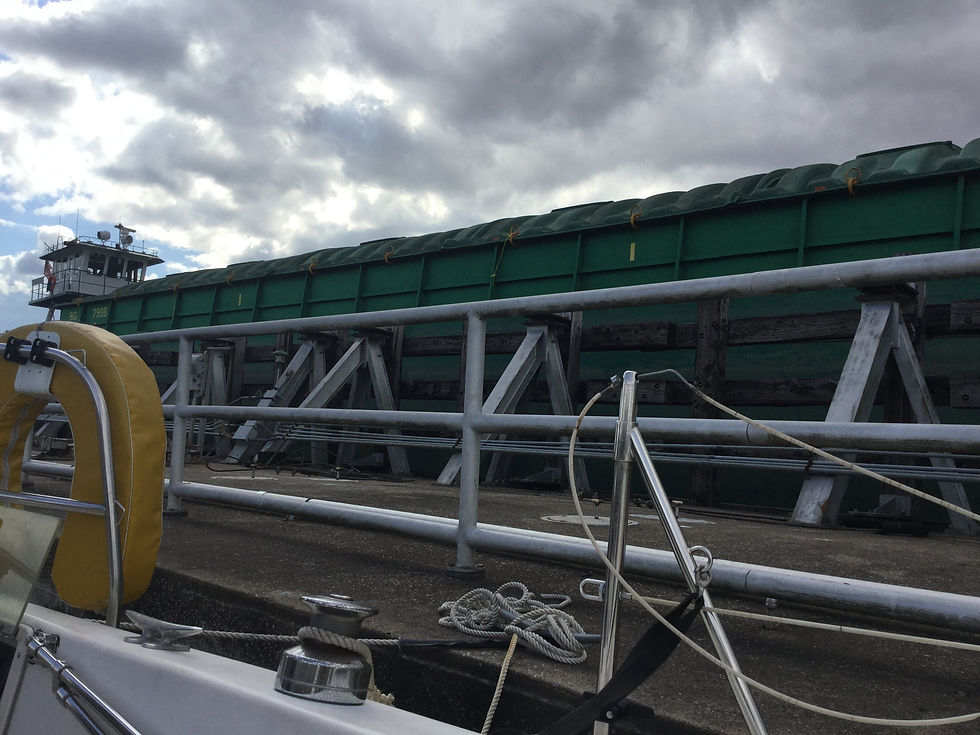
After our predawn ordeal, we could relax as we headed for the Kaskaskia lock wall. With the help of the current and starting at 5:30 am, we reached our destination by 10 am, our earliest finish yet! An interesting spot, the “dock” is the part of the lock itself, and boats traveling by tie up on the other side of the wall, in a very calm pool. Occasionally, a barge going through the lock will pass on the lock side of the wall, just 50 feet from where we sat! After bouncy nights at Hoppies, it was perfect.
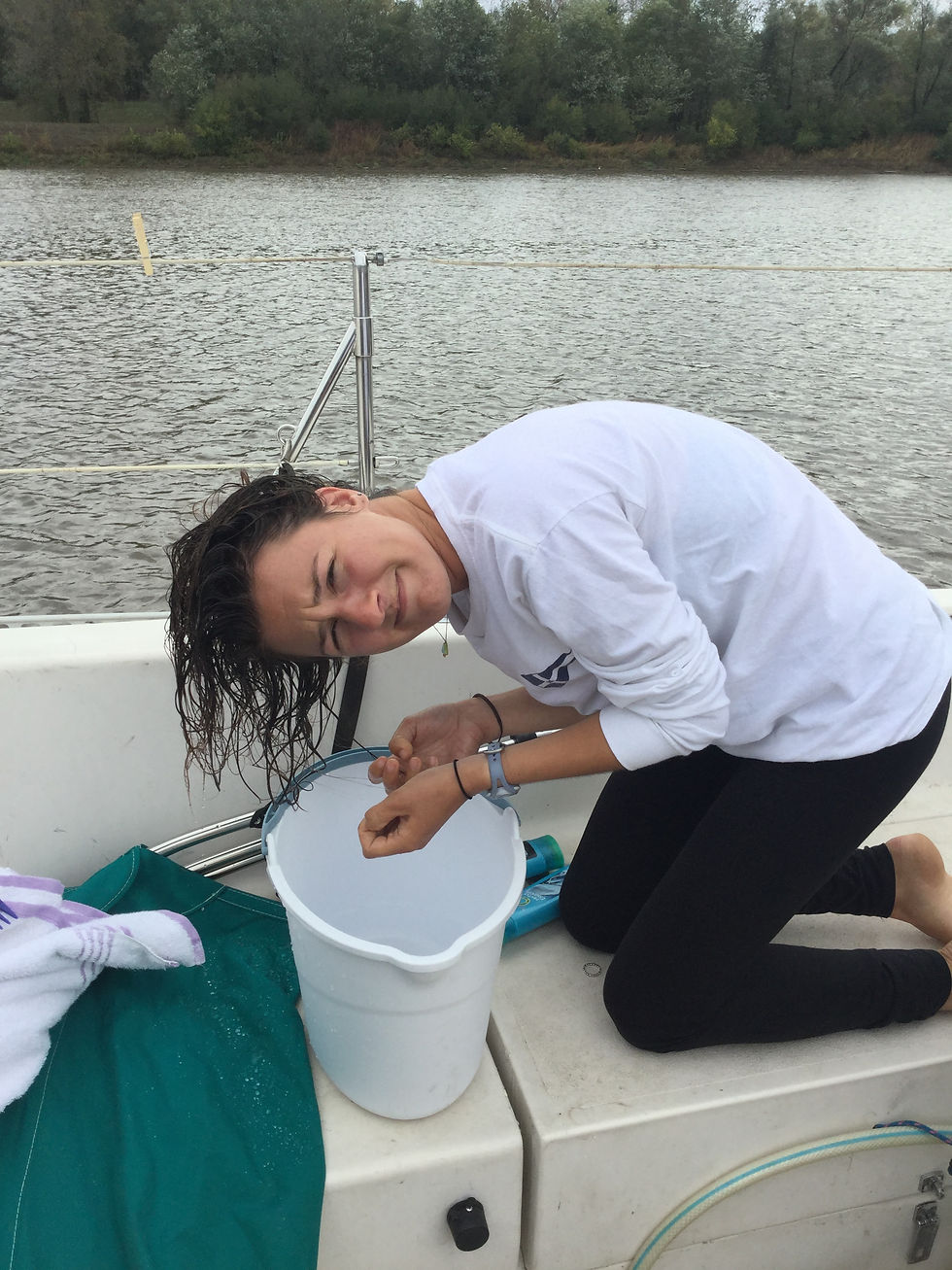
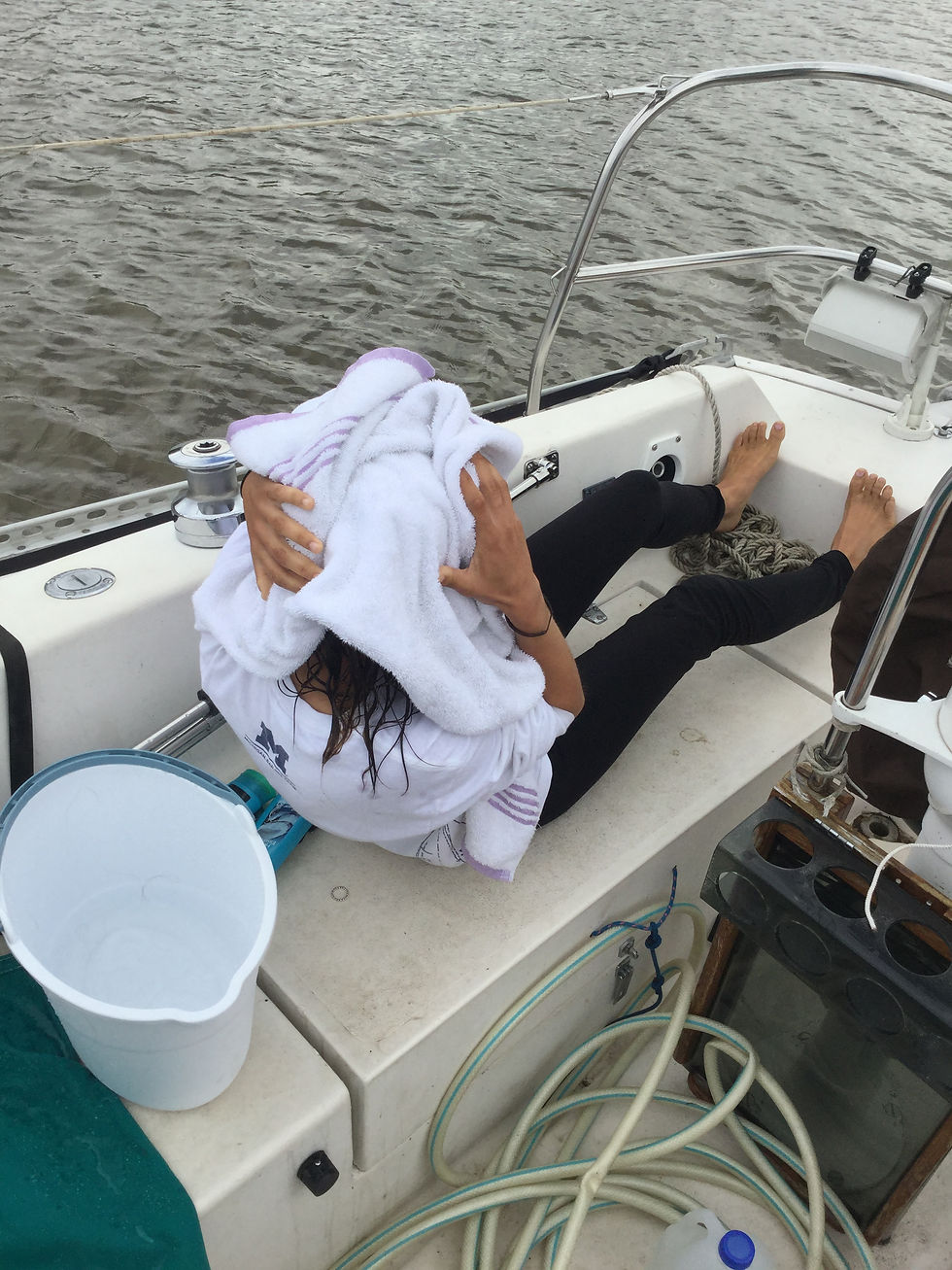
Having already been separated from showers for a few days, it was Emily’s mission to use our newfound free time to attempt to be clean. Sparingly using our leftover distilled water, I very carefully poured the frigid water over Emily’s head into a bucket as she did her best to scrub her hair. She looked like an ostrich with its head in the ground, with her head deep in the bucket so soap wouldn’t get all over the boat. Every splash of water caused her to yelp with cold, as I tried to control my laughter at how ridiculous this was. It sort of worked, and now cold and drippy she did her best to towel off and get warm. Success? Debatable; it’s a technique we will likely perfect over the coming months.
Our leaders, barge scouts, and heroes Dan & Donna of Syzygy and Jerry & Marty of Monarch were tied up there as well. We met up for a lovely dinner, and even got to take a shower on Syzygy! After our meager attempt from the morning, it was extremely welcome and far more effective. It was especially awesome because we were in the middle of nowhere and we had a long stretch of nothing ahead of us. Saying good night, we looked forward to seeing them at our next anchorage the following night.
With everything completely ready to go the next morning, we braved the new crisp air to start the engine, and nothing. Concerned but not panicked, we tried the different batteries to see if we could get something from the engine. But no luck, no click, no chugging, no engine. Uh oh. If everything worked all the time, it wouldn’t be an adventure, right? Now worried, we resigned ourselves to staying all day and troubleshooting until we figured out the issue, my mind running 1000 different scenarios of mysterious things being broken and how to handle being totally stranded.
Our few ideas tested with no success, so we followed through with our only plan that we knew would work: we called Rich Marsh. Our Crescent family knows him, but for the rest, he is the magician of everything boat, the man with all the answers, and so far the only person I know who can fix an engine from 600 miles away. Via spotty cell connection, he helped us do some tests from afar. The most exciting was connecting a screwdriver across some power cables to our starter that resulted in a huge shower of sparks, the engine almost starting, the tip of the screwdriver melting, and me almost needing to go change my underwear. This also meant we found the source of the problem: faulty wiring from the starter button. I rigged up a wire to connect to the battery for hot wiring the starter, and nervously psyched myself up to make the connection.
As a last ditch attempt to procrastinate playing with the battery, I crawled into the depths of the boat to wiggle the wires in the panel just to see what would happen. Connections jiggled, we tried the starter button, and the engine fired up as if there had never been an issue. Go figure.
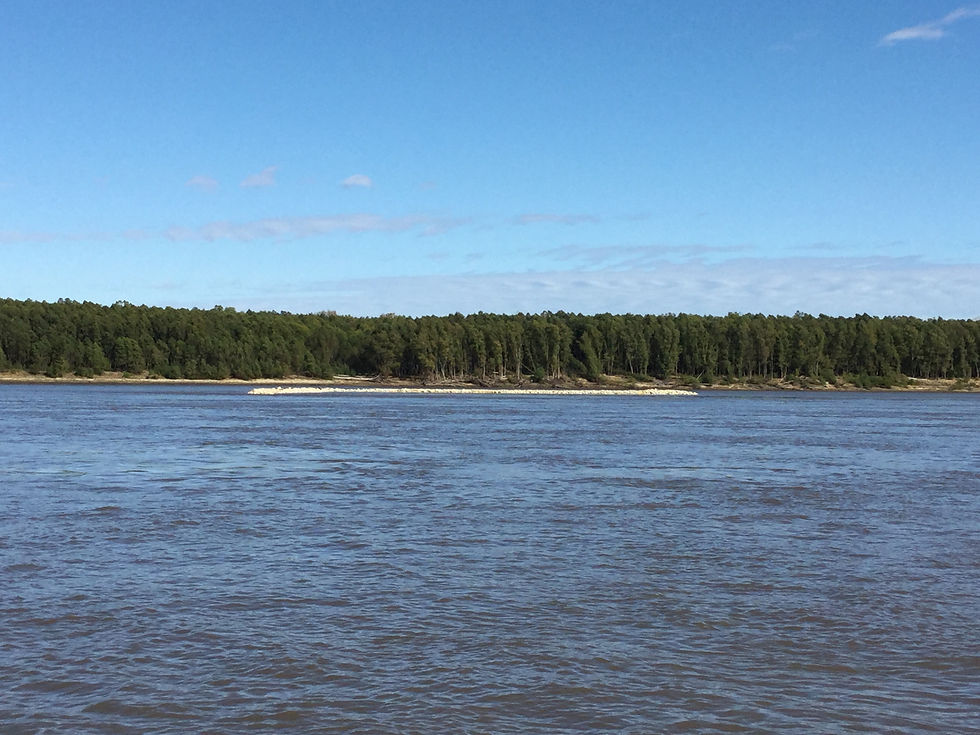
Armed with our new hotwiring skills and feeling groovy (and cold), we peeled out into the Mississippi. What is the Mississippi River like? Glad you asked! It’s exciting. It’s huge. There are many places where powerful swirling eddies toss the boat around and make it impossible to go straight. There are wingdams everywhere. Meaning, the Army Corp of Engineers built rock walls sticking out from the bank all over the place to help control the flow of the river. Sometimes they’re marked on the chart. Sometimes they are above water. If the water level is up, they are at any possible depth below the surface, and impossible to see. Sometimes they are in a weird V shape and not connected to the bank at all. Basically, wingdams are scary and you should never ever leave the channel. And the channel! It is always changing, and at any time can hug one bank or the other, or randomly cross sides of the river at a 45 degree angle to avoid a scary shallow spot. Pay attention! And it’s not enough to watch the channel markers, as they are often missing. I saw just as many channel markers on land as in the water, having been washed away by barges, high water, or trees. It is always fascinating to go past a bridge pylon or small islands in the river and see ginormous tree trunks as long as the boat piled up at the recent flood level, now high above the surface of the water. There is junk everywhere in the river, and Dodge-a-Log never ends.
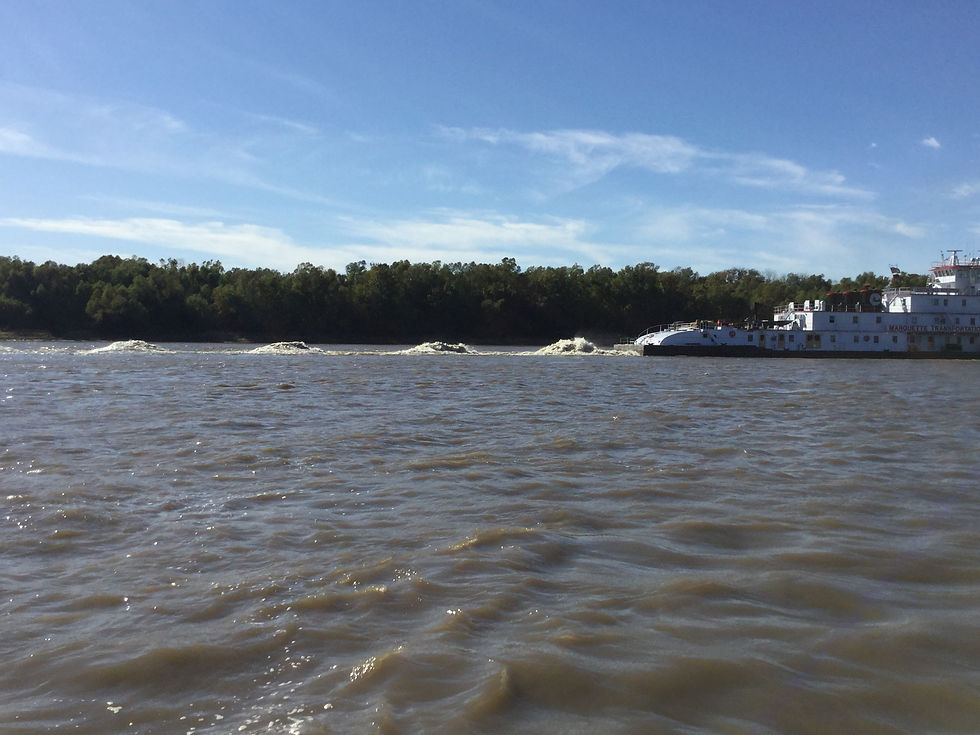
People talk about Mississippi river mud, and it is seriously muddy. We are spoiled with the Great Lakes and crystal clear water. On the river, we had about maybe 1 inch of visibility into the water. Gross. And the most fun part of all- the barges. Back on the Illinois waterway, a “big” barge was a tow that was 3 barges wide by 5 barges long, all tied together and pushed by a tug. Those were “scary.” But on the Mississippi, a 3 by 5 is cute. On average the tows were 4 wide by 5 long. They were monsters, but on the wide river, it was ok. Our biggest barge encounter was a 5 by 7, and it was way too exciting. I was driving through a particularly curvy section and noticed a huge mass of barges in the distance. I thought it was a group anchored together, but to my horror I realized it was moving. It couldn’t possibly be moving, it was too gigantic, but all of a sudden we were not in a great spot to be close to that much metal. We frantically hailed the captain to find out how we should best be out of the way, as we were hurtling toward it on the current with no option to slow down or turn back to a more straight section. He told us to move fast to the side of the river, and we found ourselves in a swirling mess of turbulence with a rock wall on one side and the flotilla eating up the water on the other. I looked back at the corner we had just rounded and paled as the space was taken up by the barge where we had been a minute before. Feeling like an age later, we were flushed past the end of the tow and discovered that it was being pushed by 2 huge tugs. It was unbelievable. Later from a distance we saw a 6 by 6, and I still can’t believe anything that large can maneuver the river.
Whenever we’re not focused on avoiding the many hazards of the river, we can enjoy the scenery- the Mississippi is quite beautiful! There are many limestone cliffs carved into the banks, and the fall colors were spectacular. We could see turtles, herons, white pelicans, and many bald eagles. There are the occasional factories and barge loading areas, but most of the banks are lined with trees and a few homes. Many of the inside curves of the river looked like white sandy beaches. The whole experience was fascinating, and the best part was our speed. With the current, we regularly hit 10 mph over the ground, and our long days were made brief.
After Kaskaskia, we only had two more stops on the Mississippi before we made the turn to go up the Ohio River. Little Diversion Canal was a perfect little calm anchorage just off the river, one of our favorites. It was sunny and warm, and the next morning we made banana pancakes. Everything was lovely until we opened up the bilge, and disaster struck. It was completely full. As we later learned, the cold snap the night before caused the metal of the drive shaft and the nuts of the packing gland to shrink just enough so that when we ran the engine all day, everything loosened up. Now we had an extremely leaky packing gland, and a lot of disappointment. All our hard work just 2 weeks before was for nothing, and we were in no position to stop and fix it. We still had a long haul until we could refill on food and water, and we would just make it without any delays. We got out the bucket and prepared ourselves for a week of constant bailing.
Our final stop on the Mississippi was Boston Bar. A horrible place to stop, but for our slow boat the only option. We managed to set a stern anchor and didn’t end up on land, and we were listening to a very busy highway bridge all night. I didn’t sleep. It was a questionable spot and the anticipation of the next day kept my mind racing all night. This was it. Tomorrow we would find out if we could make it up the current of the Ohio. We would find out what it’s like to be slow again. We would find out if we would freeze to death. We would find out a lot- the “fun” part was just beginning!
Lock entrance on the left, the dam and nice quiet pool on the right

A barge going through the lock!
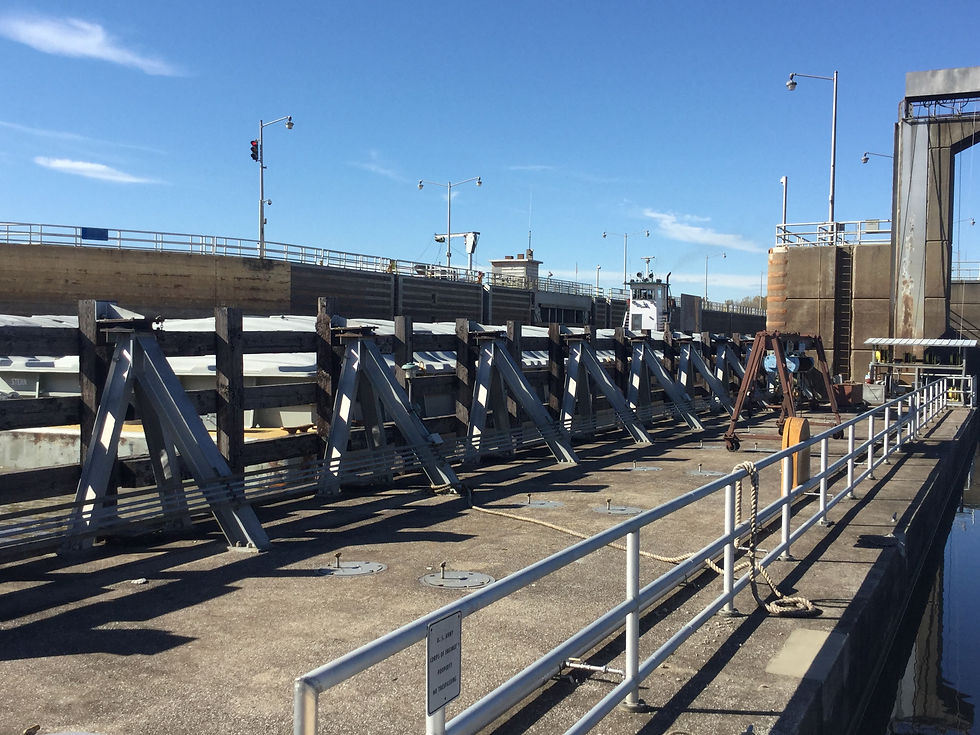
Hello barge!
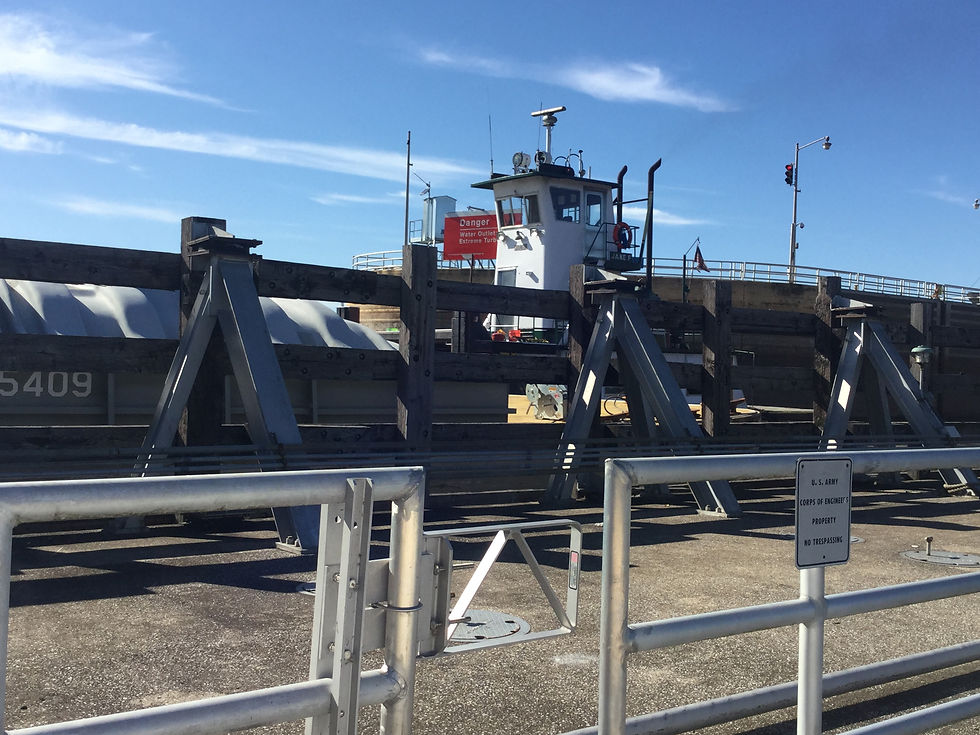
Feeling small so close
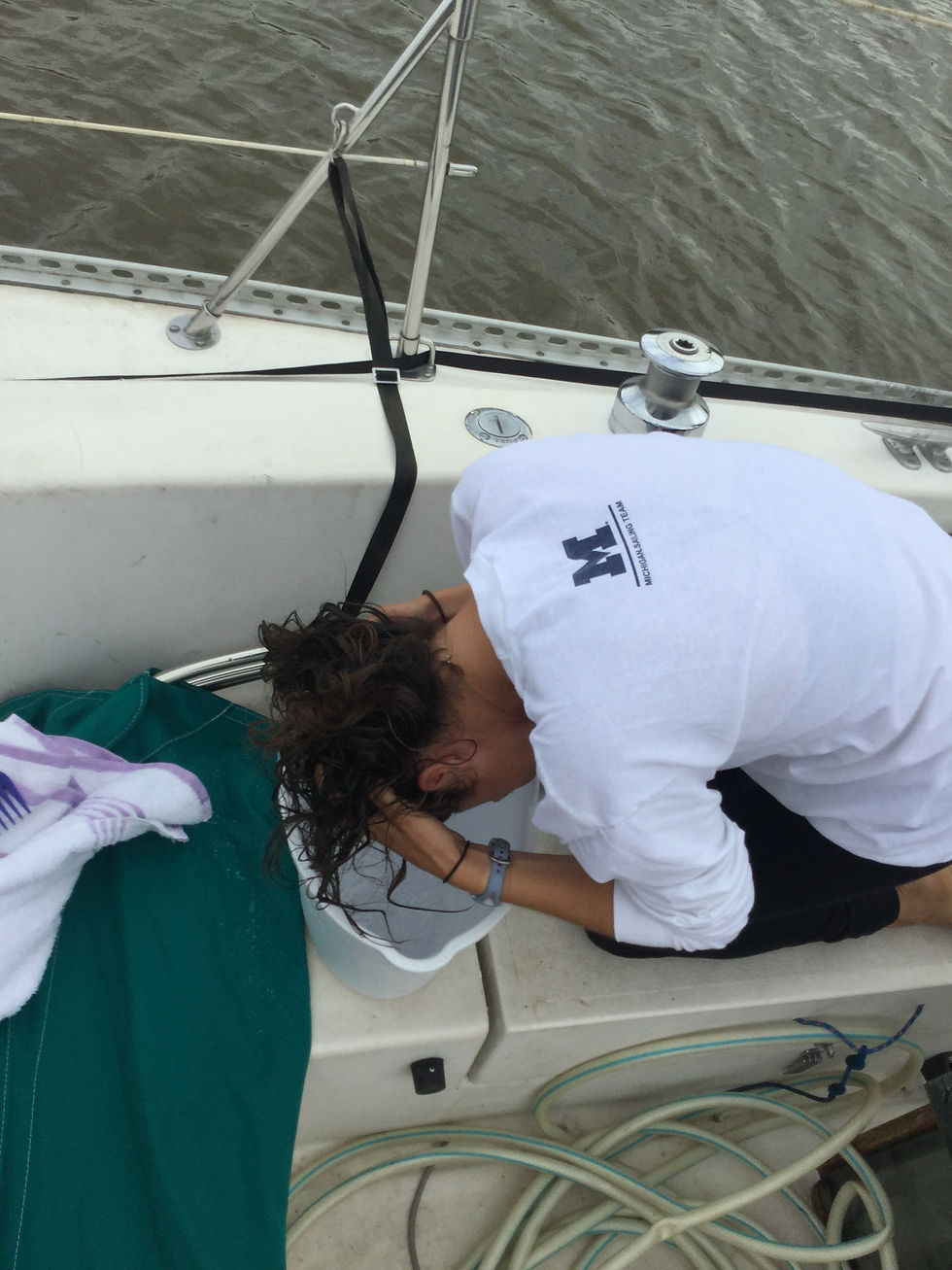
Cold
The white strip is a wingdam, a convenient pile of rocks in the middle of the river
HI BARGE

Huge standing waves were behind all upbound barges, some waves looked like they were 5 ft
Our lovely breakfast, before everything started going downhill

Comments